How do you know your sleep consultant is safe?
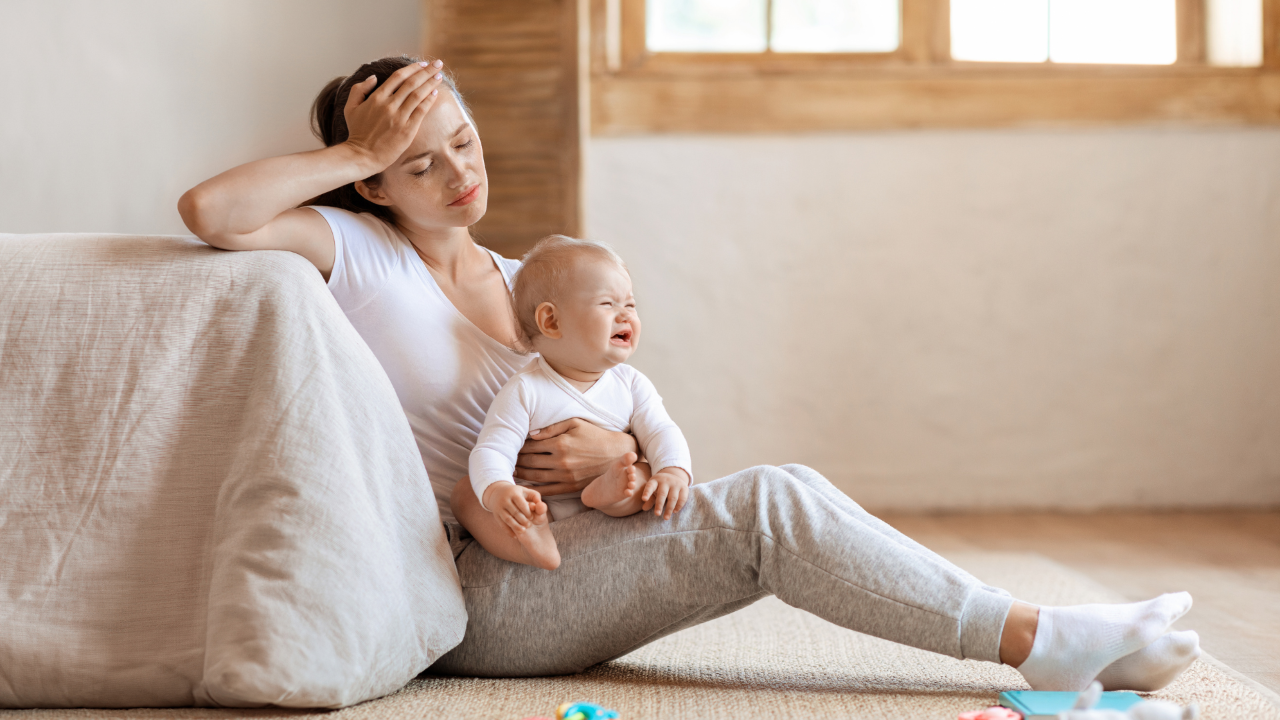
When a parent is severely sleep deprived, they are not simply looking for tips. They are often looking for a way to survive.
They may be feeding through the night, waking every hour, trying to care for older children, returning to work, recovering physically, managing anxiety, or quietly wondering whether they can keep going like this. They may also have a strong instinct that something is not quite right, that their baby is uncomfortable, in pain, unsettled beyond what feels normal, or struggling for reasons that go beyond sleep habits.
That instinct matters.
Parents are often the first people to notice when something is wrong. Yet many families tell us they have raised concerns about reflux, feeding, allergy, intolerance, anaemia, discomfort or other health issues, only to feel reassured or dismissed before the full picture has been explored.
This does not usually happen because healthcare professionals do not care. It happens because sleep, particularly baby sleep and family sleep, is still given far too little attention in most clinical training. Doctors, health visitors and other professionals are often expected to support exhausted families without having had enough structured education in sleep science, infant sleep, parental sleep deprivation or the complex relationship between sleep, feeding, development and mental health.
That leaves parents in an incredibly difficult position.
They know their family is struggling. They may feel that something physical is contributing. They may not be getting the answers they need through traditional healthcare routes. So, understandably, they look elsewhere.
Over recent years, there has been a huge rise in baby sleep consultants in the UK and internationally. Many are excellent: thoughtful, experienced, ethical and evidence-informed. Good sleep support can be life-changing for families.
But the sleep consultancy industry is not regulated. There is no single mandatory qualification, no protected title, and no universal standard that parents can easily check before they part with what can be a significant amount of money.
This is the bigger issue highlighted by the BBC’s recent investigation into unsafe baby sleep advice. The article raised concerns about self-described sleep experts giving advice that appeared to contradict established safer sleep guidance, including advice around newborn sleeping position and items placed in the cot.
That is deeply concerning. But the response should not be to shame exhausted parents for seeking help, or to dismiss the whole sleep consulting profession.
The response should be to raise standards.
Because parents do need support. And sleep deprivation is not trivial.
During Maternal Mental Health Awareness Week, it is particularly important to recognise that poor sleep in the postnatal period is not simply “part of parenting”. It can affect mood, anxiety, emotional regulation, relationships, physical health, decision-making and safety. Research on maternal mortality has identified suicide as a leading cause of maternal death, accounting for around 20% of postpartum deaths. Maternal mental health organisations also highlight that as many as 1 in 5 women experience perinatal mood and anxiety disorders.
This is why we must take parental sleep seriously.
When a parent says, “I can’t go on like this,” that deserves a meaningful response.
When a parent says, “I think something else is going on,” that deserves curiosity rather than dismissal.
And when a parent seeks help from a sleep professional, that help must be safe, compassionate, holistic and properly bounded.
I have worked in child and adult sleep for 12 years and have supported thousands of families and patients around the world. I am also a nurse, which means I have clinical training and a framework that helps me recognise when a sleep issue may not be “just sleep”.
But this distinction is important: recognising a possible medical concern is not the same as diagnosing it.
If I suspect that reflux, allergy, anaemia, feeding difficulty, airway issues, pain or another health concern may be affecting a child’s sleep, my role is to explain why it matters, pause where needed, and direct the family back to the appropriate healthcare professional for proper assessment, testing and diagnosis.
That boundary is not a limitation. It is safe practice.
A sleep consultant should never replace a GP, health visitor, paediatrician, feeding specialist, allergy specialist or mental health professional. But a well-trained sleep consultant should know enough to recognise when a family needs medical review, additional support or a different pathway.
This is where professional standards matter.
As European Director of the Association of Professional Sleep Consultants, I believe strongly that our profession needs clearer expectations, higher standards and more public guidance. The APSC exists to promote high standards of practice within sleep consulting and to support ethical, professional care for families.
This is not about banning sleep consultants.
It is about making it easier for parents to find the excellent ones.
It is about helping families understand what safe, professional sleep support should look like.
It is about encouraging healthcare professionals to take sleep deprivation seriously and to recognise that baby sleep problems can sometimes be a sign of something else.
And it is about ensuring that anyone giving sleep advice understands both the power and the limits of their role.
So what should parents look for when choosing a baby sleep consultant?
A good practitioner should be happy to answer questions. They should not be defensive about their training, experience or approach. They should explain their reasoning clearly and adapt their advice to the whole family, rather than applying a single method to every baby.
Useful questions to ask include:
-
What training have you completed, and how long was the course?
-
Do you have ongoing mentoring, supervision or professional development?
-
Are you part of a professional body with a Code of Ethics?
-
Do you follow NHS and Lullaby Trust safer sleep guidance?
-
How do you assess feeding, growth, reflux, allergy, discomfort, development and parental mental health?
-
What would make you refer a family back to a GP, health visitor, paediatrician or other healthcare professional?
-
Do you use one fixed method, or do you tailor support to the baby and family?
-
How do you make sure your advice is safe for this specific child?
Some red flags include:
-
Advice that clearly contradicts safer sleep guidance.
-
Medical advice without directing the family back to a qualified healthcare professional.
-
A rigid, one-size-fits-all method.
-
Guaranteed promises that sound too certain.
-
Lack of interest in feeding, health, development, temperament or family circumstances.
-
No clear explanation of qualifications or professional standards.
-
Language that makes parents feel blamed, shamed, frightened or pressured.
-
No screening for parental mental health or safeguarding concerns.
Parents deserve better than confusing, unsafe or overly simplistic advice.
They also deserve better than being told to “just wait it out” when the whole family is struggling.
The truth is that baby sleep is rarely just about sleep. It sits at the intersection of infant development, feeding, physical health, parental mental health, family dynamics, culture, safety and biology.
That is why support must be holistic.
It is also why we need a more joined-up approach. Healthcare professionals need better training in sleep. Sleep consultants need clearer standards and boundaries. Parents need accessible guidance on how to choose safe support. And families need to be listened to when they say they are not coping.
The BBC article has opened up an important conversation. But the real issue is much bigger than one report.
It is about how we protect exhausted parents and babies.
It is about how we raise standards without losing compassion.
And it is about how we make sure that when families ask for help, the help they receive is safe, evidence-informed and worthy of their trust.
If you are looking for safe sleep support, get in touch. As experienced sleep specialists, we know when it is not just sleep.
Join our mailing list below to get exclusive early access to
free educational content, tools and other goodies!
We won't send spam. Unsubscribe any time.